


Calls - 1000m2 (EE/O2/Vodafone/ASDA/BT) Mobile Signal Booster


✓ Compatible with multiple users and devices
✓ Complete kit: all parts included
✓ Simpler Install and Maintenance
Enhance your mobile signal with boosters from top UK providers like EE, O2, Vodafone, ASDA, and BT, offering coverage up to 1000m2.
Frequently Bought Together
Boost4U GD1000 Dual-Band Commercial Mobile Signal Booster — Calls & 4G Data for All Four UK Operators Across 1000 m²
Just £605.16 GBP — the commercial Boost4U unit that combines Band 8 (900 MHz) 2G GSM voice calls & SMS with Band 3 (1800 MHz) 4G LTE data in a single amplifier. Uplink gain ≥60 dB, downlink gain ≥65 dB, an 8 dBi weatherproof Yagi directional outdoor antenna and a 10 dBi commercial-grade indoor panel antenna on a 10 m low-loss N-type coax, covering up to 1000 m² (10,764 ft²) — a large home, small office, shop, bar, restaurant or warehouse — for up to 100 simultaneous users. DIY install in 30–60 minutes on UK 240 V mains.
The Boost4U GD1000 is the GD dual-band commercial — a Band 8 & Band 3 (900/1800 MHz) FDD mobile signal booster that simultaneously amplifies 2G GSM voice calls and SMS on 900 MHz and 4G LTE data on 1800 MHz, delivering ≥60 dB uplink and ≥65 dB downlink gain across up to 1000 m² (10,764 ft²) — a large residential home, small office, shop, bar, restaurant, warehouse or metal-sided commercial building. It pairs an 8 dBi weatherproof Yagi directional outdoor antenna (mounted at 3–5 m, aimed at the nearest base station) with a 10 dBi commercial-grade indoor panel antenna on a 10 m low-loss N-type coax (upgradable to 20/30/40/50 m), runs from an AC 100–240 V UK 3-pin adapter outputting DC 5 V, and supports up to 100 simultaneous users. It is the only unit in the Boost4U range that covers all four UK carriers at once — EE, O2, Vodafone and Three — but with an important caveat: O2 and Vodafone customers receive 2G voice (Band 8) but not 4G data, because those operators' 4G rides mainly on Band 20 (800 MHz); Three customers receive 4G data (Band 3) but not 2G voice; and only EE customers receive both 2G voice and 4G data. It does not boost 5G, 3G, Band 20 (800 MHz) 4G or Band 7 (2600 MHz) 4G. Ofcom licence-exempt, UKCA/CE certified with AGC, it is priced at £605.16 GBP and is covered by a 365-day money-back guarantee with free UK delivery in 10–15 working days.
GD1000 Full Technical Specifications
| Parameter | Value |
|---|---|
| Product Name | Boost4U GD1000 Mobile Booster (GD Dual-Band Commercial — Band 8 & 3 — 2G Voice + 4G LTE Data — 1000 m²) |
| Model | GD1000 |
| SKU / MPN | B4U-GD1000-UK / GD1000-B8B3-9001800 |
| Brand / Category | Boost4U · GD Dual Band Commercial Mobile Signal Boosters |
| Price | £605.16 GBP (dual-band commercial; GD500 is £365.49 for 500 m² / 50 users — the GD1000 steps up to 1000 m², 100 users, 60/65 dB and a 10 dBi commercial indoor panel) |
| Product Type | Dual-band FDD mobile signal booster — 2G GSM voice calls/SMS on Band 8 + 4G LTE data on Band 3 |
| Frequency Bands | Dual Band 8 & Band 3 (900 MHz & 1800 MHz) |
| Uplink Frequency — Band 8 | 890 – 915 MHz (900 MHz) |
| Downlink Frequency — Band 8 | 935 – 960 MHz (900 MHz) |
| Uplink Frequency — Band 3 | 1710 – 1785 MHz (1800 MHz) |
| Downlink Frequency — Band 3 | 1805 – 1880 MHz (1800 MHz) |
| Uplink Gain | ≥ 60 dB (commercial — 5 dB above the GD500's ≥55 dB) |
| Downlink Gain | ≥ 65 dB (commercial — 5 dB above the GD500's ≥60 dB) |
| Maximum Output Power | −70 to −40 dBm/FA (1.23 MHz carrier bandwidth) |
| Indoor Coverage Area | Up to 1000 m² (10,764 ft²) — large residential home / small office / shop / bar / restaurant / warehouse / metal-sided commercial building |
| Simultaneous Users | Up to 100 simultaneous users / devices (double the GD500's 50) |
| Outdoor Antenna | 8 dBi Yagi directional outdoor antenna (weatherproof; wall / chimney / fascia / roof mount at 3–5 m; must be aimed at the nearest base station) |
| Indoor Antenna | 10 dBi commercial-grade panel indoor antenna (3 dBi above the GD500's 7 dBi panel) |
| Standard Cable | 10 m low-loss coaxial cable (N-type connectors; upgradable to 20 / 30 / 40 / 50 m for large commercial buildings) |
| Connector Type | N-type male / female on both ends of the coax |
| Power Supply Input | AC 100 – 240 V, 50/60 Hz (UK 3-pin plug) |
| Power Supply Output | DC 5 V |
| 2G Voice Support (Band 8) | Yes — Band 8 900 MHz GSM voice calls and SMS for EE, O2, Vodafone and their MVNOs |
| 4G LTE Data Support (Band 3) | Yes — Band 3 1800 MHz LTE data for EE, Three and their MVNOs |
| 4G Speed Improvement | From 1–5 Mbps (no signal) up to 10–30 Mbps (good donor signal) on Band 3 |
| 5G NR Support | No — 5G is not boosted on any band |
| 3G Support | No — 3G (UMTS) is not boosted |
| Unsupported 4G Bands | Band 20 (800 MHz) and Band 7 (2600 MHz) 4G are not boosted |
| SMS Support | Yes — 2G SMS on Band 8 900 MHz |
| Automatic Gain Control | AGC built in — self-adjusts across both bands to prevent oscillation and overload |
| Regulatory | Ofcom licence-exempt · UKCA · CE certified |
| Installation | DIY install, 30–60 minutes, drill + screwdriver + spanner + ladder, no engineer required |
| Outdoor Signal Required | At least 1–2 bars of usable outdoor donor signal (Band 8 and/or Band 3) at the Yagi mounting point |
| Antenna Separation | Minimum 10 m vertical separation between outdoor Yagi and indoor panel antenna to prevent self-oscillation |
| Upgradable Options | Outdoor coax to 20 / 30 / 40 / 50 m; higher-gain Yagi antenna; 18 kA lightning surge protector |
| Warranty / Returns | 365-day money-back guarantee · lifetime technical support |
| Delivery | Free UK delivery, 10–15 working days; order handling 1–2 working days |
UK Carrier & MVNO Compatibility — Band 8 Voice × Band 3 Data Matrix
The GD1000 is the only Boost4U commercial unit that covers all four UK carriers at once — but it does not give every carrier the same thing. It boosts Band 8 (900 MHz) 2G voice and Band 3 (1800 MHz) 4G data only. Check your carrier's rows below before ordering, and insert your existing SIM — no new contract needed.
| Carrier / Network | 2G Voice (Band 8 900 MHz) | 4G LTE Data (Band 3 1800 MHz) |
|---|---|---|
| EE | Supported — calls & SMS | Supported — 4G LTE data (10–30 Mbps improved) |
| O2 | Supported — calls & SMS | NOT supported (O2 4G rides mainly Band 20 800 MHz) |
| Vodafone | Supported — calls & SMS | NOT supported (Vodafone 4G rides mainly Band 20 800 MHz) |
| Three | NOT supported (Three has switched off 2G in most UK areas) | Supported — 4G LTE data (10–30 Mbps improved) |
| ASDA Mobile | Supported (Vodafone host) — calls & SMS | Supported — 4G LTE data |
| BT Mobile | Supported (EE host) — calls & SMS | Supported — 4G LTE data |
| Virgin Mobile | Supported (O2 host) — calls & SMS | Supported — 4G LTE data |
| Orange | Supported — calls & SMS | Supported — 4G LTE data |
| T-Mobile | Supported — calls & SMS | Supported — 4G LTE data |
| giffgaff | Supported (O2 host) — calls & SMS | — |
| Sky Mobile | Supported (O2 host) — calls & SMS | — |
| Tesco Mobile | Supported (O2 host) — calls & SMS | — |
| Lebara | Supported (Vodafone host) — calls & SMS | — |
| Lycamobile | Supported (O2 host) — calls & SMS | — |
| Talkmobile | Supported (Vodafone host) — calls & SMS | — |
| TalkTalk Mobile | Supported — calls & SMS | — |
| Plusnet Mobile | — | Supported (EE host) — 4G LTE data |
| iD Mobile | — | Supported (Three host) — 4G LTE data |
| SMARTY | — | Supported (Three host) — 4G LTE data |
| Freedom Pop | — | Supported — 4G LTE data |
What's in the Box
| Item | Description |
|---|---|
| GD1000 Booster Unit | 1 × indoor amplifier unit with LED indicator lights (power, Band 8 signal, Band 3 signal, AGC status) |
| Outdoor Antenna | 1 × 8 dBi Yagi directional weatherproof outdoor antenna (wall / chimney / fascia / roof mount at 3–5 m) |
| Indoor Antenna | 1 × 10 dBi commercial-grade panel indoor antenna |
| Coax Cable | 1 × 10 m low-loss coaxial cable with N-type connectors fitted (upgradable to 20 / 30 / 40 / 50 m) |
| Power Adapter | 1 × UK 3-pin AC 100–240 V, 50/60 Hz adapter, DC 5 V output |
| Mounting Brackets | 2 × installation brackets — one for outdoor wall mounting, one for indoor mounting |
| Documentation | 1 × English user manual with DIY install guide and lifetime technical support card |
Pros & Cons — Honest Review
Pros
- The only Boost4U commercial unit that combines Band 8 (900 MHz) 2G voice and Band 3 (1800 MHz) 4G LTE in one box at the 1000 m² tier — one amplifier, one power supply, one drill kit, not two.
- Covers all four UK carriers (EE, O2, Vodafone, Three) and their MVNOs at once — ideal for small offices, shops, bars, restaurants and warehouses with mixed-operator staff and customer SIMs.
- EE customers get the complete package: 2G calls and SMS on Band 8 and 4G LTE data on Band 3, both boosted simultaneously up to 10–30 Mbps.
- 1000 m² (10,764 ft²) rating fits a large residential home, a small office, a shop, a bar, a restaurant, a warehouse or a metal-sided commercial building — double the GD500's 500 m².
- Up to 100 simultaneous users — double the GD500's 50, enough for a busy shop, a 50-desk office, a bar or a warehouse with staff across one floor.
- Commercial gain of ≥60 dB uplink / ≥65 dB downlink — 5 dB above the GD500's 55/60 dB — and a 10 dBi commercial-grade indoor panel (3 dBi above the GD500's 7 dBi) for larger open-plan commercial spaces.
- 8 dBi weatherproof Yagi outdoor antenna pulls in weak fringe donor signal far better than a basic omni antenna, and it is directional so it can be aimed at the exact mast you need.
- 10 m low-loss N-type coax (upgradable to 20/30/40/50 m) gives real routing freedom between roof/chimney Yagi and central indoor unit in a large commercial building.
- Ofcom licence-exempt, UKCA/CE certified with built-in AGC across both bands — fully legal in the UK, no monthly fee, no new SIM contract, backed by a 365-day money-back guarantee.
- DIY install in 30–60 minutes with a drill, screwdriver, spanner and ladder — no engineer visit, no call-out charge.
Cons
- At £605.16 it is the most expensive dual-band unit in the Boost4U range — £239.67 above the GD500 at £365.49. You are paying for the 1000 m² footprint, 100-user capacity, 60/65 dB gain and 10 dBi commercial panel.
- O2 and Vodafone customers get 2G voice (Band 8) but not 4G data, because those operators' 4G rides mainly on Band 20 (800 MHz), which this unit does not boost — for O2/Vodafone 4G you need the C1000 Band 20 unit.
- Three customers get 4G data (Band 3) but not 2G voice, because Three has switched off its 2G network in most of the UK.
- It does not boost 5G, 3G, Band 20 (800 MHz) 4G or Band 7 (2600 MHz) 4G — if you need any of those, this is the wrong product.
- The dual-band gain of 60/65 dB is intentionally lower than the single-band G1000/D1000/C1000 units at 80 dB — one chassis splits its RF budget across two bands, so raw dB is not as high as a single-band sibling.
- Rated 1000 m², but that is the ceiling — a 2000 m² warehouse, a multi-floor industrial unit, a 150-desk open-plan office or a hotel will outgrow it and need the C2000 enterprise unit.
- Requires at least 1–2 bars of usable outdoor donor signal at the Yagi mounting point — it amplifies what is there, it cannot create signal from nothing.
- The 8 dBi Yagi is directional and must be physically aimed at the nearest base station; point it the wrong way and you will get little or no improvement.
- The 10 m standard coax may not reach from a roof Yagi to a central indoor unit in a 1000 m² warehouse or large commercial building — the 20/30/40/50 m upgrade is a paid extra and loses a little signal per metre.
- Outdoor and indoor antennas need at least 10 m of vertical separation to prevent self-oscillation (feedback) — in a warehouse with a flat roof this means placing the indoor panel well inside, away from the roof-mounted Yagi.
- 100 simultaneous users is a hard cap built into the RF design — a busy exhibition hall, a 150-desk office, a hotel with guests across multiple floors or a warehouse with staff and contractors at peak times will outgrow it.
- Commercial buildings with steel cladding, mezzanine floors or partitioned offices may need more than one indoor panel antenna to cover the full 1000 m² — a single 10 dBi panel has a finite radius.
- Standard free UK delivery is 10–15 working days with 1–2 days handling — not next-day; if you need it urgently, budget for the lead time.
3-Step DIY Installation (30–60 Minutes)
Aim & Fix the Yagi at 3–5 m
Bracket-mount the 8 dBi weatherproof Yagi on the wall, chimney, fascia or warehouse roof at 3–5 m using the included outdoor bracket, screws and spanner. Use a field-strength app to point it at the nearest EE / O2 / Vodafone / Three mast — direction matters on a Yagi. Run the 10 m N-type low-loss coax through the wall; use the 20/30/40/50 m upgrade if the route from roof to central indoor unit is long.
Place the 10 dBi Indoor Panel
Mount the 10 dBi commercial-grade indoor panel antenna centrally — office ceiling, shop wall, bar ceiling or warehouse column — at least 10 m vertically below the outdoor Yagi to prevent oscillation. Connect the coax to the GD1000 unit's N-type port. The 10 dBi panel covers more open-plan commercial floor area than the GD500's 7 dBi unit, so central placement is key for 1000 m²; consider a second panel if the warehouse has mezzanines or partitioned offices.
Plug In & Test Across 1000 m²
Plug the UK 3-pin AC adapter into a standard wall socket (DC 5 V output). The LED indicators show power, Band 8 lock and Band 3 lock; AGC self-adjusts across both bands within 60 seconds. Walk every area — office floor, stock room, bar terrace, warehouse bay — with an EE phone (both bands), an O2/Vodafone phone (calls only) and a Three phone (data only) to confirm coverage for up to 100 simultaneous users.
Built for Commercial Premises & Large Mixed-Carrier Homes
Small Office (50 Desks)
Staff on mixed EE / O2 / Vodafone / Three SIMs finally get calls and 4G data in the same box across 1000 m², with 100-user headroom for visitors.
Shop / Retail Unit
Staff and customer phones, card-terminal SMS and mobile data hold through the shop floor, back office and stock room across 1000 m².
Bar / Restaurant / Pub
Up to 100 patrons and staff connected at once — order-ahead 4G data, card-terminal SMS and phone calls hold across the floor, terrace and function room.
Warehouse / Metal Building
Steel-clad warehouse, workshop or industrial unit that used to kill every phone call and mobile data connection across a 1000 m² plot.
Frequently Asked Questions — Real UK Dual-Band Commercial, 1000 m² Problems
Why is the GD1000 £605.16 when the GD500 is £365.49 — what does the extra £240 actually buy me?
The £240 upgrade buys you four things that matter in a commercial premises: (1) 1000 m² of coverage instead of 500 m² — enough for a small office, a warehouse or a large shop rather than a five-bed detached house; (2) 100 simultaneous users instead of 50 — enough for a busy shop, a 50-desk office or a bar at peak rather than a 20-desk office; (3) commercial gain of ≥60 dB uplink / ≥65 dB downlink, 5 dB more than the GD500's 55/60 dB; and (4) a 10 dBi commercial-grade indoor panel antenna instead of the GD500's 7 dBi panel, which reaches further across open-plan commercial space. If your premises is 500 m² or smaller and you are a household rather than a business, the GD500 at £365.49 is the better buy. The GD1000 exists for the small office, the shop, the bar, the restaurant or the warehouse that has outgrown the GD500's 500 m² / 50-user ceiling.
Does the 1000 m² rating really cover a small office plus warehouse, or will I need multiple indoor antennas?
The 1000 m² rating is the maximum coverage area the GD1000's 10 dBi commercial indoor panel can serve from a single central placement — and a typical small UK office or single-bay warehouse is around 600–900 m² of floor area, so 1000 m² comfortably covers it from one central panel. If your property is a 2000 m² warehouse, a multi-floor industrial unit, a 150-desk open-plan office, a hotel or a building with steel mezzanines and partitioned offices, a single 10 dBi panel will not reach every corner and you would need either a second indoor antenna on the same coax (not recommended — it splits the signal) or a second GD1000 unit on a separate donor antenna, or the C2000 enterprise unit for 2000 m². For the vast majority of single-storey shops, bars, restaurants and small offices, one centrally placed 10 dBi panel on the ceiling covers the whole premises. Walk every area after install — if the stock room or far office still shows weak signal, move the panel more central or add the cable upgrade.
Why is the dual-band gain 60/65 dB when the single-band G1000, D1000 and C1000 do 80 dB — am I buying a weaker booster?
No — the dB number is lower because one chassis is doing two jobs, not because the amplifier is weaker. A single-band G1000 (Band 8 only, £505.91) or D1000 (Band 3 only, £396.00) dedicates its entire RF budget to one frequency, so it can push 80 dB through one antenna path. The GD1000 has to split that same power supply and amplifier budget across two bands simultaneously — Band 8 (900 MHz) and Band 3 (1800 MHz) — so the per-band gain lands at 60/65 dB. The trade-off is deliberate: you lose 15–20 dB of raw per-band gain, but you gain both voice and data in one box, one drill kit and one power supply. If your building is very large and weak and you only need Band 8 voice, the G1000's 80 dB will go further; if you only need Band 3 4G, the D1000's 80 dB will go further. The GD1000 is the right call when you need both bands in the same commercial building and you cannot justify two separate units.
We have a commercial premises with EE, O2, Vodafone and Three SIMs across staff — does the GD1000 really cover all four at 1000 m²?
Yes, and this is the exact use case the GD1000 commercial was built for. The GD1000 amplifies Band 8 (900 MHz) and Band 3 (1800 MHz) continuously — it does not switch between them. So an EE phone gets amplified 2G calls on Band 8 and amplified 4G data on Band 3 at the same time. An O2 or Vodafone phone gets amplified 2G calls and SMS on Band 8, with its 4G data left as-is (because O2/Vodafone 4G rides Band 20 800 MHz, not Band 3). A Three phone gets amplified 4G data on Band 3, with its calls left as-is (because Three has no 2G network). Up to 100 devices can be connected at once, which is plenty for a 50-desk office with staff plus customers. The carrier caveat is the same on the GD1000 as on the GD500 — only EE customers get both voice and data from this one unit.
The standard coax is 10 m — will it really reach from my warehouse roof Yagi to the central indoor unit?
It depends on the layout. In a typical single-storey warehouse or retail unit, the Yagi on the roof or gable is 4–6 m above the indoor unit on the office ceiling, and the horizontal run along the wall or conduit is another 6–10 m — so 10 m is often tight or just short. If your Yagi is on the far gable end of a 50 m long warehouse and the indoor panel is in the central office 20 m away, the 10 m standard cable will not reach and you will need the 20 m, 30 m, 40 m or 50 m upgrade. Each extra metre of low-loss N-type coax loses a small amount of signal (around 0.1–0.2 dB/m at 1800 MHz), so pair a longer cable run with the higher-gain Yagi option to compensate. Before ordering, measure the route from your proposed Yagi mount to your proposed indoor panel position along the walls and ceiling — if it is over 10 m, add the cable upgrade at checkout. Do not stretch or coil the 10 m cable; a tight loop creates its own interference.
Is 100 simultaneous users enough for a busy shop, bar or warehouse, or do I need the enterprise C2000?
For a corner shop, a 50-desk small office, a neighbourhood bar or a 60-cover restaurant, 100 concurrent users is plenty — it covers staff plus a typical number of customers on their own phones at any one time. For a busy exhibition hall, a 150-desk open-plan office, a hotel with guests across multiple floors, a warehouse with contractors and staff at peak, or a pub with 150+ patrons at a weekend, 100 will be too few and you should step up to the enterprise C2000 (2000 m²). The 100-user cap is a hard limit built into the RF design — it is not a soft licence you can upgrade. If you are unsure, count how many phones, tablets and mobile hotspots are actively using mobile data or making calls during your busiest hour; if that number stays under 100, the GD1000 commercial is the right size. The GD1000's 100-user capacity is exactly double the GD500's 50, so it is the commercial step-up for growing premises.
Why is the indoor panel 10 dBi on the GD1000 when it is 7 dBi on the GD500 — does that 3 dBi difference really matter for commercial open-plan space?
Yes, 3 dBi matters more than it sounds at first. Antenna gain is logarithmic: a 3 dBi increase means the indoor panel radiates roughly double the effective power in its main direction. In a 1000 m² open-plan commercial space — where the indoor unit sits on a central office ceiling and has to reach the shop floor, the stock room, the bar terrace and possibly a mezzanine — that extra reach is what makes the difference between the far stock room showing two bars versus four bars. The GD500's 7 dBi panel is fine for a 500 m² five-bed detached home, but for a 1000 m² warehouse or retail unit with open-plan living, the 10 dBi commercial panel is the reason the GD1000 can claim 1000 m². Place the 10 dBi panel at the centre of the premises, on the ceiling or a central column, facing downwards into the open area — do not tuck it in a back office, or the wall will absorb the extra gain.
My O2 or Vodafone 4G data is slow in the warehouse — will the GD1000 speed it up?
No, and this is the single most important caveat to understand before ordering. The GD1000 boosts Band 3 (1800 MHz), which is the 4G LTE band that EE and Three use. O2 and Vodafone carry most of their UK 4G traffic on Band 20 (800 MHz) — a lower frequency that penetrates buildings better but that the GD1000 does not cover at all. So an O2 or Vodafone SIM in a GD1000-boosted premises will show full bars for calls and SMS on Band 8 (900 MHz), but your 4G mobile data will not be amplified at all. If your pain point is slow O2 or Vodafone 4G data in the warehouse, you need the C1000 Band 20 (800 MHz) booster at £535.00, not the GD1000. The GD1000 is the right choice if your pain point is dropped calls and failing texts on O2/Vodafone, or if you have an EE or Three data SIM in the same building. Do not order the GD1000 expecting it to speed up O2/Vodafone 4G — it will not.
What happens if my outdoor Yagi only picks up Band 8 signal but not Band 3 (or vice versa) — does the GD1000 still work?
Yes, the GD1000 works band-by-band independently. It has two amplifier paths — one for Band 8 (900 MHz) and one for Band 3 (1800 MHz) — controlled by separate AGC loops and shown on separate LED indicators. If your Yagi picks up strong Band 8 donor signal but weak or zero Band 3 signal, the Band 8 path will amplify calls and SMS normally, and the Band 3 path will simply idle (the Band 3 LED will show low or off). Your EE/Three 4G data will not be boosted, but your O2/Vodafone/EE calls will. Conversely, if your Yagi picks up strong Band 3 but weak Band 8, your EE/Three 4G data will be boosted but calls will not. The 8 dBi Yagi is directional, so if you find one band is missing, try re-aiming the Yagi slightly — different operators' masts sometimes sit on different bearings, and a 10–20 degree adjustment can bring in the missing band. The LED indicators on the front of the GD1000 tell you exactly which band is locked, so you can diagnose this in seconds.
Can I DIY install the GD1000 Yagi at 3–5 m on a warehouse roof myself, or do I need a scaffolder or electrician?
The GD1000 is designed for DIY install in 30–60 minutes with a drill, screwdriver, spanner and ladder — but the Yagi mount at 3–5 m on a commercial building is the one step where safety matters. If you have a sturdy extension ladder, a wall-mounted bracket at 3–4 m on a solid brick or rendered warehouse wall, and a helper to hold the ladder, most competent business owners or facilities staff can do it. If your Yagi needs to go on a flat industrial roof with a safety harness, a pitched slate or tiled roof ridge, a chimney stack above first-floor guttering, or a listed building, hire a professional aerial rigger or scaffolder — the cost is worth it for the safety margin. You do not need an electrician: the GD1000 runs from a standard UK 3-pin wall socket (DC 5 V output), there is no mains wiring inside the unit, and the coax is low-voltage RF. The only electrics work is drilling a hole through an external wall for the coax and sealing it with silicone. If you are nervous about heights, the 365-day guarantee gives you the option to install the Yagi at a lower wall height (2–3 m) and accept slightly weaker donor signal before committing to the roof mount.
Learn More: Dual-Band Commercial, 1000 m² Guides
Best Dual-Band Signal Booster for 1000 m² — UK Commercial Buyer's Guide
How to choose a Band 8 + Band 3 commercial booster that covers all four UK operators across a small office, shop, bar, restaurant or warehouse.
GD1000 vs GD500 — £605 Commercial 1000 m² or £365 Flagship 500 m²?
Honest UK comparison of the GD1000 commercial (1000 m², 100 users, 60/65 dB, 10 dBi panel) against the GD500 flagship (500 m², 50 users, 55/60 dB, 7 dBi panel).
How to Improve Mobile Signal Across a 1000 m² Commercial Premises — UK Step by Step
Yagi aiming at 3–5 m, 10–50 m N-type coax routing, 10 m antenna separation and DIY install for small offices, shops, bars and warehouses.
Band 8 + Band 3 (900/1800 MHz) Commercial Booster — EE, O2, Vodafone, Three at 1000 m²
Why O2/Vodafone get calls only, Three gets data only, EE gets both — and why the 60/65 dB dual-band gain is lower than the 80 dB single-band siblings.
Comprehensive Coverage
Experience unparalleled mobile signal enhancement with our booster, covering an impressive area of up to 1,000 m². Perfect for large homes, offices, hotels, and warehouses, it ensures that everyone stays connected without interruptions.

Dual Band Performance
Our mobile signal booster operates on both 900MHz and 1800MHz frequencies, providing simultaneous support for all major UK networks. This dual-band capability guarantees improved voice calls and 4G LTE data for all users, regardless of their mobile provider.

Enhanced Call Clarity
Say goodbye to dropped calls and hello to crystal-clear conversations. With the ability to boost 4G Calling (VoLTE), our device ensures that your voice calls are clearer and more reliable, even in areas with weak signal.

Fast SMS and Data Transmission
Enjoy quick and reliable SMS text messaging and data uploads/downloads. Our booster enhances your 4G/LTE connection, allowing for seamless communication and faster internet speeds, so you can stay connected without delays.

Easy Installation
Setting up your mobile signal booster is a breeze. With straightforward instructions and all necessary components included, you can have your system up and running in no time, ensuring immediate improvements in your mobile signal.

Upgrade Options Available
Tailor your booster to your specific needs with our upgrade options. Choose from longer external cables, higher gain antennas, or surge protectors to enhance performance and protect your investment, ensuring optimal signal strength.

3 Steps to Full Bars
1. Place the Outdoor Antenna
Mount the antenna where you get the best signal.
2. Connect the Booster Inside
Plug in the booster and connect to the antenna.
3. Enjoy Full Bars Everywhere
Clear calls, fast data, and no more dead zones.
Mobile Signal Booster EE Mobile Booster O2 Signal Booster Vodafone Signal Booster ASDA Mobile Signal Booster BT Mobile Signal Booster 1000m2 Coverage UK Mobile Boosters
It boost All Calls & 4G/LTE signal on 900MHz, 1800MHz frequencies, the frequencies used in UK and Europe used by mobile networks to deliver their mobile services: 2G (also known as GSM) and 4G. It can boost UK and Europe all network operators for improving Voice Calls & Text signal. It also can boost UK all networks on Three, EE, BT, Asda, Virgin, iD Mobile, Freedom Pop, Orange, Plusnet, Smarty Mobile, T-Mobile and The People's Operator for improving 4G LTE signal. If your phones support 4G Calling (also called Voice over LTE or VoLTE) and your area 4G Calling is available, with the booster you can make clearer voice calls using 4G network. It is a high-performance booster, boost indoor signal cover an area up to 1,000 m2, great for large house, offices, hotel, warehouse and more.
This system is compatible with all GSM mobile phone networks, will provide coverage on both 900MHz, 1800MHz frequency simultaneously. It's Dual Band booster and is an ESSENTIAL if many people in the same household are on different mobile phone networks!
No Miss Important Calls
Wow 2G/4G Calls
Eliminates Dropped Calls
SMS Text Messages Quickly
Consistent Connection
Reliable 4G/LTE Data
Reception Up to 1,000 sq.m.
4G/LTE Internet
Faster Uploads & Downloads
Upgrade External Cables
If our standard package 10 meter external cable length is not enough to cover your area you have an upgrade option.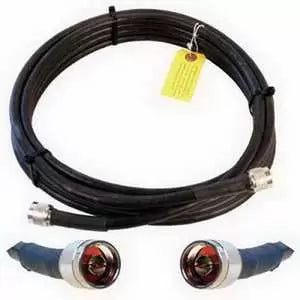
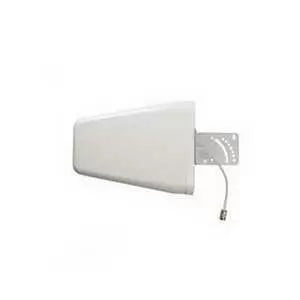
Upgrade External Aerial
Higher Gain Yagi Antenna - For better performance it's a must if indoor your phone with 1/2 signal bars. Or get this upgrade if outdoor best signal strength in the following range:2G (GSM) -76 to -90 dBm
3G (UMTS) -80 to -94 dBm
4G (LTE) -97 to -105 dBm
How to shown dBm reading on phone? Check Quick Start Guide
Upgrade Protector
Lightning Surge Protector - Designed to Protect your equipment from high amperage surges due to lightning strikes on aerials or masts in close proximity to the device. This unit is rated for 18KA of current surge and is very simple to install on any device.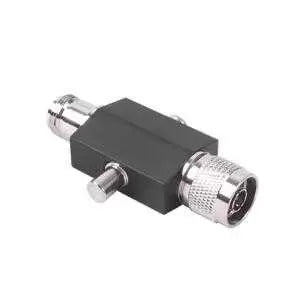
Specification
| Application & Bands | [Voice Calls] (Band 8, 3) |
| Country | United Kingdom |
| Boost All On | EE (2G & 4G) O2 (2G) Vodafone (2G) Three (4G) Asda (2G & 4G) BT (2G & 4G) Freedom Pop (4G) Giffgaff (2G) iD Mobile (4G) Lebara (2G) Lycamobile (2G) Orange (2G & 4G) Plusnet Mobile (4G) Sky Mobile (2G) Talkmobile (2G) TalkTalk (2G) Tesco (2G) The People's Operator (2G & 4G) T-Mobile (2G & 4G) Virgin (2G & 4G) |
| Users Supporting | 100 Simultaneously |
| Band | Dual Band 8 & 3 |
| Frequency | 900 & 1800MHz |
| Gain(dB) | Uplink Gp≥65; Downlink Gp≥70 |
| Up-link | 890~915 MHz; 1710~1785 MHz |
| Down-link | 935~960 MHz; 1805~1880 MHz |
| Export Power(Po) | ≥27dBm |
| Power Adapter | Input: AC 100V~240V 50/60Hz; Output: DC 5V |
| What’s Included | 1 x Booster 1 x Outdoor Antenna 1 x Indoor Antenna 1 x UK Type Power Adapter 1 x 10 Meters Outdoor Cable 1 x 5 Meters Indoor Cable |
Custom your solution
Expandable coverage by adding indoor antenna if the outside signal is strong.

How It Works
1
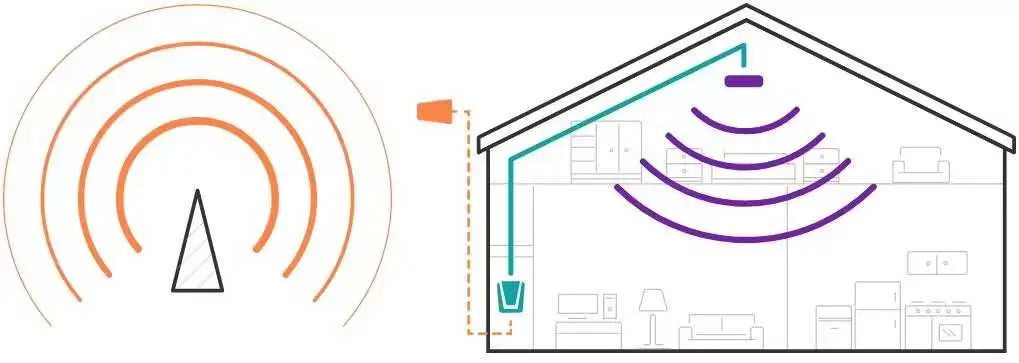
The powerful antenna reaches out to access a voice and 3G, 4G, and LTE data signal, and delivers it to the booster
2
The booster receives the signal, amplifies it, and serves as a relay between your phone and the nearest cell tower.
3
Your devices get increased cell reception, and calls and data are fed through the booster back to the network.
Get stronger signal
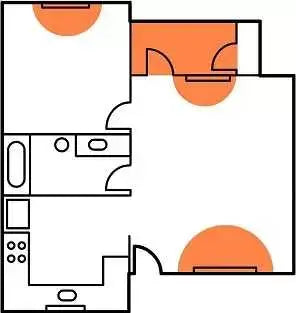
Normal Cell Coverage
Dropped calls and slow data are generally caused by three things: distance from a cell tower, building materials in your home or office, or obstruction from tall objects such as trees, topography, and buildings.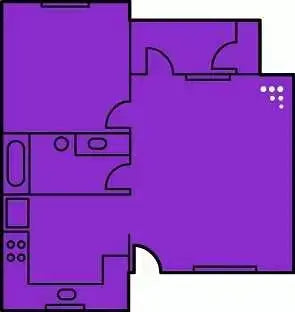
Signal Coverage with our booster
Signal boosters increase cell signal by collecting signals with a powerful antenna, delivering those signals to the booster, amplifying the cell signals so your devices receive them, and delivering your device's boosted signals back to the cell tower.Installation
- Connect the indoor antenna to the MS port.
- Connect the outdoor antenna to the BS Port.
- Install the outdoor antenna and keep a minimum vertical distance of 10 meters from the indoor antenna.
- Point the outdoor antenna to the direction where you know there is possibly a higher signal strength from the base station.
- Power on the booster and check the signal strength.
- Adjust the outdoor antenna until you get the best signal strength.
IMPORTANT NOTE:
DO NOT POWER ON THE DEVICE UNTIL YOU HAVE COMPLETED THIS SETUP.
Read more about User Manual Documentation.
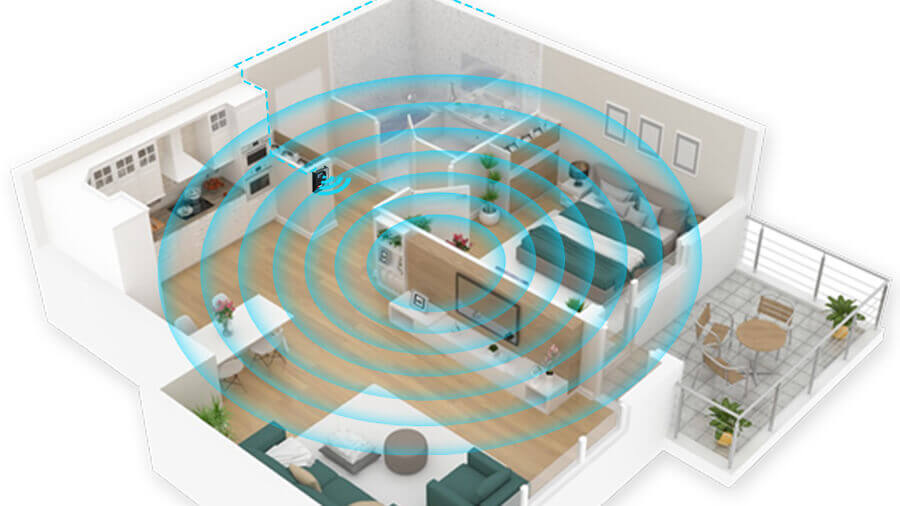
Application Scenarios

Home

Office

Garage

Metal Buildings
dual band mobile signal booster band 8 3 900 1800mhz uk all four operators ee o2 vodafone three £605, gd1000 dual band 2g voice 4g lte data booster 1000m² ee o2 vodafone three uk 60 65db, all network commercial mobile booster calls and 4g data combined 900 1800mhz office warehouse uk £605, band 8 and band 3 dual frequency booster ee o2 vodafone three full operator coverage uk 1000m² 10dBi panel, best dual band commercial booster uk 2026 £605 ee 4g o2 vodafone calls three 4g 1000 sqm office warehouse 100 users
gd1000 booster price £605 dual band calls and 4g data 1000m² commercial uk free delivery 10 15 days 365 day guarantee | ee o2 vodafone three all operator signal booster 1000m² small office shop bar restaurant warehouse uk commercial | 8dBi yagi directional outdoor antenna 10dBi commercial indoor panel booster 900 1800mhz dual band 1000m² uk aim at mast | ofcom exempt dual band commercial booster 2g voice 4g lte combined 100 simultaneous users 1000m² uk | diy dual band commercial booster 30 60 min drill screwdriver spanner ladder 3 5m yagi mount no engineer uk office | band 8 band 3 dual frequency repeater small office shop bar restaurant warehouse metal building uk 1000m² commercial | n type connector low loss coax 10m dual band commercial signal booster upgradable 20 30 40 50m uk warehouse office | ac 100 240v uk 3 pin dc 5v dual band commercial booster ee o2 vodafone three all networks 1000m² uk 100 users
why is the gd1000 dual band gain 60 65db lower than the single band g1000 d1000 c1000 80db booster uk commercial | does a 1000m² dual band booster really cover a small office warehouse or do i need multiple indoor antennas uk | why do o2 vodafone customers still not get 4g data on the gd1000 commercial 900 1800mhz booster uk | what is the difference between the gd1000 £605 commercial and the gd500 £365 dual band booster uk 1000m² vs 500m² | how many simultaneous users can a 1000m² dual band commercial booster really handle in a busy shop or warehouse uk | why is the indoor panel 10dBi on the gd1000 vs 7dBi on the gd500 does it matter for commercial open plan spaces uk | can i diy install the gd1000 yagi at 3 5m on a ladder myself for a warehouse or do i need a scaffolder uk | what happens if the outdoor yagi only picks up band 8 but not band 3 signal does the gd1000 still work commercial uk
gd1000 vs gd500 dual band booster 1000m² 100 users £605 vs 500m² 50 users £365 which commercial uk | gd1000 £605 vs g1000 £505 plus d1000 £396 separate single band total £901 worth it dual band commercial uk | dual band commercial booster vs femtocell vs wifi calling for small office ee o2 vodafone three uk 1000m² | why is the gd1000 60 65db dual band gain lower than the 80db single band g1000 d1000 c1000 commercial booster uk | gd1000 vs c1000 band 20 800mhz booster which one fixes my o2 vodafone slow 4g data indoors in a warehouse uk | 1000m² dual band commercial booster vs enterprise c2000 2000m² booster when do i need to step up uk | all four operators commercial booster vs single carrier booster multi staff office 1000m² warehouse uk | gd1000 dual band vs l1000 lte only booster do i still need 2g voice calls on o2 vodafone in a small business uk
Why You'll Love It
Powerful Signal Boost
Easy Installation
Networks Supported
Fast Speeds
Crystal Clear Calls
Wide Coverage Area

Award-Winning Signal Booster
2026 Winner
Smart Features, Made Simple
Easy Setup
Smart Technology
Energy Efficient
Reliable Performance
24/7 Support
Secure & Safe
- Choosing a selection results in a full page refresh.
